I would probably never have come to Hawai'i if my nephew wasn't living and studying there. It always seemed very commercialized, which it is, and Americanized, which it is, but what surprised me was the strong Asian influence. 53% of the population in Honolulu identify as Asian. Which is why you can get sushi at the 7-Elevens in Hawaii. Seriously.
And, talking about sushi, Hawaii is probably the only place on earth where you can order sushi made with spam. It's called spam musubi - a block of rice topped with fried spam and wrapped in nori. I tried it. It tastes pretty much the way you would think.
For some reason, Hawaiians love spam. I saw spam cookbooks in museum gift shops. According to a reliable source (Wikipedia), the taste for spam goes back to WW2 when GIs were served spam. Whatever, it is a thing in Hawaii. It's even locked in special containers in the supermarket, I assume so that it's not easy to steal.
But I don't intend to write this whole blog about spam, or even food, although Honolulu does have a lot of really good restaurants! I want to highlight some of the things I enjoyed most, other than spending time with my nephew.
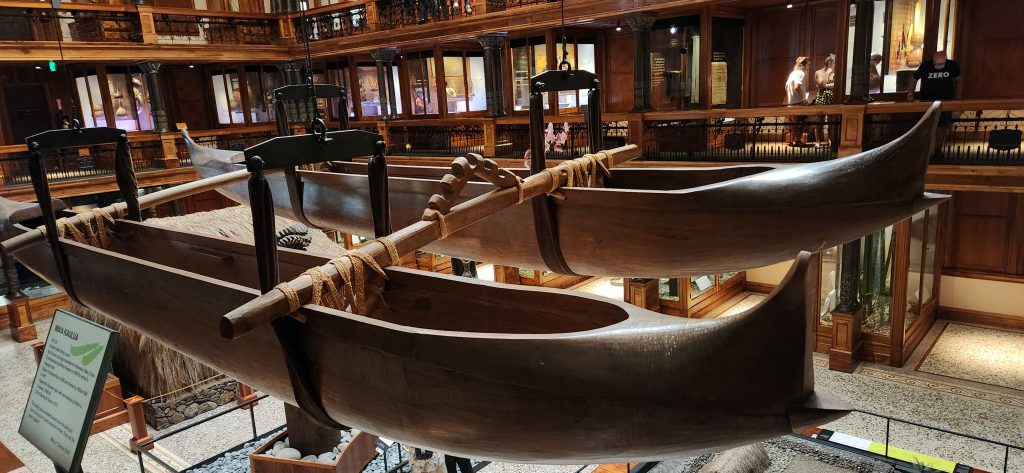
One of the highlights was seeing a film at the Bishop Museum about the Wayfinders of Polynesia - how for thousands of years people navigated the oceans using the positions of the stars, the ocean waves, and sightings of birds to find their way across thousands of miles of open oceans. These navigation methods were almost lost, but recent efforts have revived the knowledge as well as the skill of building the outrigger canoes that were used to settle thousands of islands in the Polynesian triangle.
The book "Hawaii" by Michener gives a fascinating fictional account of how the islands of Hawaii were originally settled by a group of people from Tahiti. I would recommend reading the book as well as looking for some of the films that have been produced by PBS, BBC and others on Wayfinding.
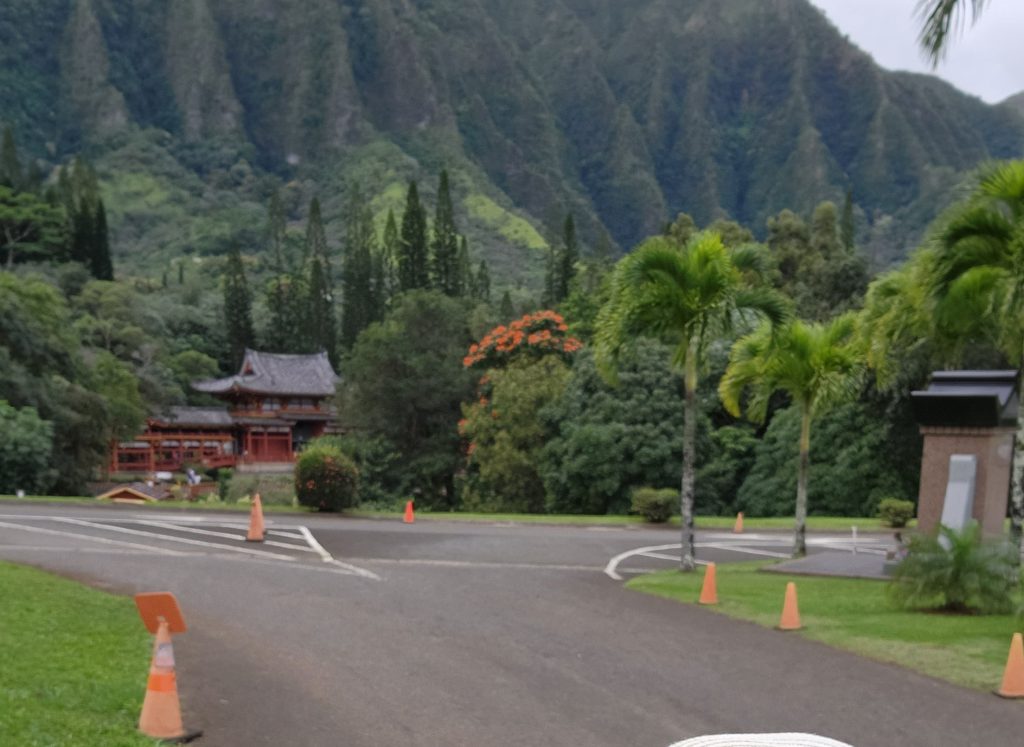
I wanted to get out of Honolulu to see a bit of the countryside, so I took the city bus out to the Byodo-In Temple, about an hours bus ride out through a forest reserve and smaller towns. I thought I was tracking my progress along the route with Google maps, but somehow I missed my stop. When I realised my mistake, I asked the driver and he said it was back where everyone else got off! Luckily the bus was near the turn around point and I was able to get off when he returned. It was a little walk up to the temple, through the Valley of the Temple Memorial Park. The temple is set against steep, forest covered mountains and was built in 1968, a replica of a temple by the same name in Japan to commemorate the 100th anniversary of the first Japanese immigrants.
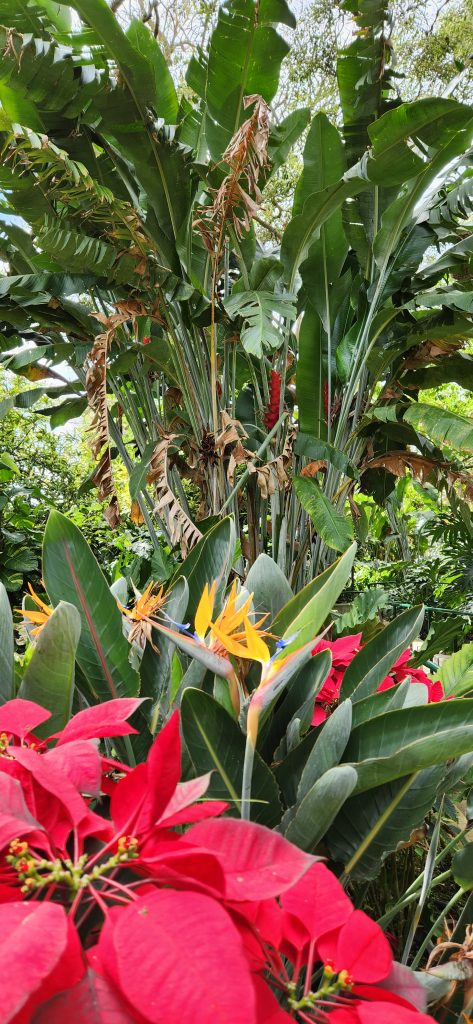
I would have liked to have gone to the Ho'omaluhia Botanical Gardens, which is out near the temple, but there was no bus that went near it and I didn't feel like renting a car or hiring a taxi to go there, so I stopped at the smaller Foster Botanical Gardens, which is close to downtown Honolulu. It is lovely to walk around and has a good gift shop!
From the Botanical Gardens I walked over to Chinatown. The Chinese were originally brought to Hawai'i in the 1800s to work in the sugar cane plantations. They were diligent in saving their money and educating their children so that when their contracts expired, they were able to open businesses in areas such as Chinatown. I didn't have a lot of time to explore there, but I had enough time to order a fruit smoothie with pearls (tapioca balls).
Hawai'i really does have a fascinating history with Captain Cook being the first known non-Polynesian to arrive there (1778). That British influence can be seen to this day in the state flag, which bears a Union Jack. From then on Hawai'i was visited by explorers, traders, whalers and missionaries and it wasn't long until the native population was reduced to a fraction of its original size through the introduction of diseases. I highly recommend reading Michener's fictional account of Hawai'i from its formation as an island to its annexation by the US, with the history of the first missionaries, the stories of the immigrants brought in to work on the plantations, along with the stories of the native population and how Hawai'i came to have one of the most diverse cultures in the world.